Warehouse · Case Study
DC Glenmarie: Energy and Air-Quality Monitoring for High-Value Warehousing
DC Glenmarie, a CapitaLand-owned warehouse, monitors energy and indoor air quality with CobiNeural to protect high-value stored goods while keeping a large facility efficient.
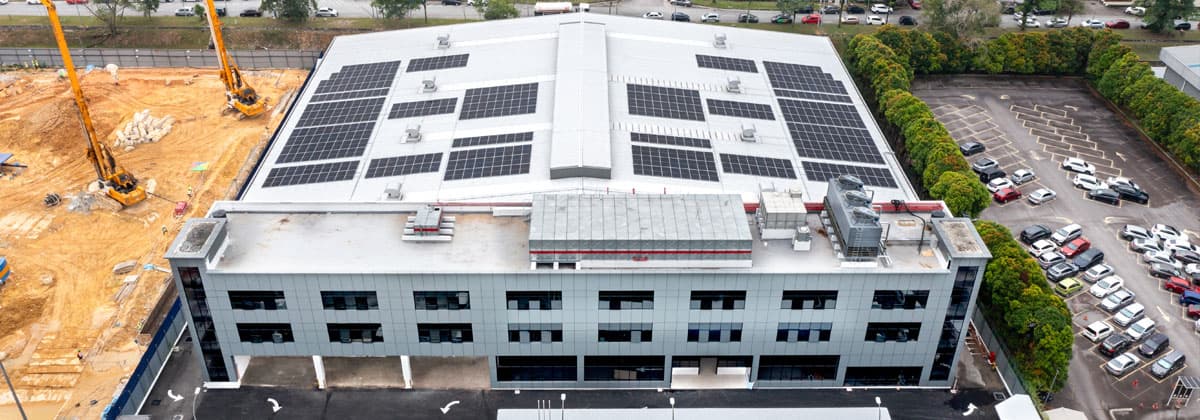
DC Glenmarie, a CapitaLand warehouse outside Kuala Lumpur, monitors both its energy use and its indoor air quality with CobiNeural. The team sees demand and storage conditions live, can act on a change before goods are damaged, and can show clients evidence of the conditions their stock was kept in.
The site
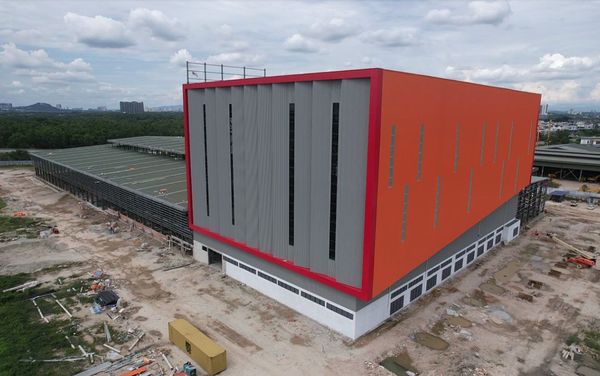
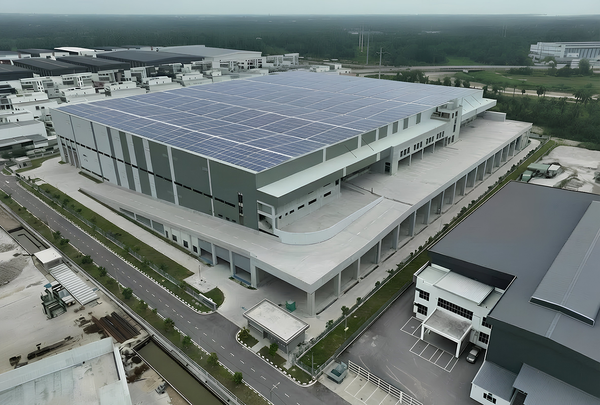
DC Glenmarie is a logistics and storage facility in Glenmarie, in the Shah Alam industrial area outside Kuala Lumpur. It is owned and developed by CapitaLand. The facility holds inventory for its clients, including high-value goods for international luxury brands. The building therefore has two jobs: run efficiently as a large industrial load, and keep storage conditions steady enough to protect the goods inside.
For a third-party warehouse, both are commercial obligations. Energy is one of the largest costs the building can control, and the condition of a client's stock is the service being sold. A spike in humidity or an unnoticed temperature change is more than a facilities issue. It puts at risk the goods of a brand that expects them back in the condition they arrived.
The problem
A warehouse this size has a large and uneven electrical load, with lighting, air conditioning, dehumidification, dock equipment and controlled-storage zones all running at once. Without readings at intervals shorter than a month, the facility only learns its peak demand from the monthly Tenaga Nasional Berhad (TNB) bill, after the charge is set. It also cannot easily link consumption to the systems causing it.
Air quality is the harder risk to see. Luxury textiles, leather, packaging and cosmetics degrade when temperature and humidity move outside a narrow range. Condensation, mould and corrosion build up slowly and are usually found only when the goods are inspected. Conventional building systems were not designed to log indoor air quality continuously, or to raise an alarm as soon as a zone moves out of range.
What we did
DC Glenmarie runs CobiNeural as one platform for both problems. It works as an overlay on the existing building and equipment systems rather than replacing them.
- Insights → Energy records consumption and maximum demand at 30-minute and finer resolution. The team sees the facility's actual load profile and the equipment behind each peak, which lets them manage TNB maximum demand instead of simply paying it.
- Insights → IAQ monitors indoor air quality (IAQ) across the storage zones, covering temperature, humidity and CO2. Conditions are measured continuously rather than assumed, so the team can prove the environment a client's goods were kept in.
- Alerts notifies the right person when a zone's humidity or temperature moves towards the range where stored goods are at risk, or when an energy anomaly appears, while there is still time to respond.
- Dashboards and Reporting give one operating view of the site and an auditable record. This supports daily operations and gives brand clients the assurance they expect from the facility holding their inventory.
What changed
- Energy and air quality are managed on the same platform instead of in separate, manual processes.
- The team sees demand and storage conditions live, and can act on a change before it becomes a damaged-goods problem.
- The facility can show clients evidence, not only assurances, that their stock was kept in the right conditions.
For a warehouse whose business is protecting other companies' goods, efficient operation and provable storage conditions are the service itself. See how other operators run warehouse monitoring, or request a demo to see energy and IAQ monitoring for your own facility.
Ready to achieve similar results?
Let's discuss how CobiNeural can transform your energy management.