Maximum Demand · Peak Shaving Malaysia
Under TNB’s RP4 tariff, one 30-minute spike can set your demand charge for the entire month — at RM89.27 to RM97.06 per kW. Cobler’s CobiNeural platform watches your big loads in real time and alerts your team before a peak sets the bill. Your team staggers or pauses loads, and your monthly maximum demand stays low. No battery. No rip-and-replace. It runs standalone or over your existing BMS.
How do you reduce maximum demand charges in Malaysia?
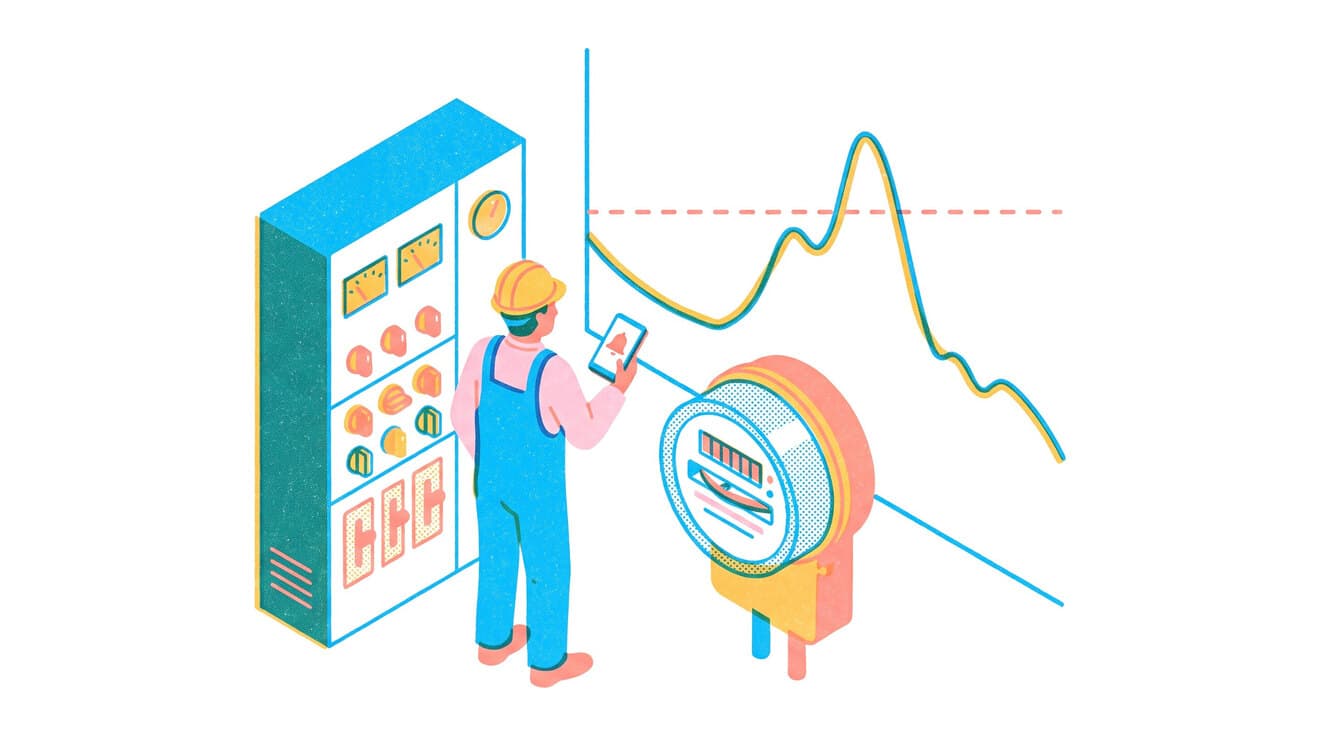
You shave the peak. Maximum demand is billed on your highest 30-minute average kW in the month. Trimming short spikes, by staggering or pausing large loads like chillers, air handling units (AHUs) and compressors, lowers the charge. CobiNeural alerts your team before demand crosses the threshold you set, so they can act in time. No battery storage required.
Trusted by Malaysia’s largest building operators
Real deployments across hotels, hospitals, malls and commercial towers — not a pilot.
The Charge
Maximum demand (MD) is the highest average power your site draws in any single 30-minute interval during the billing month, measured in kilowatts (kW). TNB doesn’t average your demand across the month — it charges you on that one peak half-hour. So if every chiller, pump and compressor happens to run together for 30 minutes on one hot afternoon, that spike sets your demand charge for all 30 days.
Under the RP4 tariff (effective 1 July 2025), the old MD charge was replaced by a combined Capacity + Network Charge, billed at RM89.27/kW per month for Medium Voltage General and RM97.06/kW per month for Medium Voltage Time-of-Use customers. On a 1,000 kW site, that’s roughly RM89,000–97,000 every month — before you’ve paid for a single kWh of actual energy.
The RP4 detail most people miss:
for Non-Domestic MV and HV customers, demand peaks that occur during the off-peak period are not charged. Shift or curtail your big loads so the monthly peak lands off-peak — or never happens — and the charge drops. Timely alerts are what make that possible.
How It Works
Peak shaving means keeping your demand under a target threshold so no single 30-minute interval spikes your bill. CobiNeural gives your team threshold-based alerts in time to act, not a battery you have to buy.
CobiNeural sub-meters your major loads — chillers, air-handling units, compressors, pumps — and logs demand in real time, at the same 30-minute resolution TNB bills on.
We establish the kW ceiling that protects your bill, based on your tariff and load profile.
The platform tracks the rising half-hour average and sees a threshold breach before it registers on the meter.
CobiNeural sends a WhatsApp or email alert before demand crosses the ceiling, with the big loads that are running. Your team delays a start, staggers equipment or pauses a non-critical load.
Measurement and verification tracks each change against a baseline, so you can see the peak that didn’t happen and the ringgit it saved.
Do you need batteries? No.
Peak shaving with CobiNeural works by changing how the equipment you already run is scheduled and started, with no capital outlay for energy storage. Battery energy storage (BESS) integration is on our roadmap for sites that want to push savings further, but it is not required to start cutting your demand charge today. This runs standalone or over your existing BMS and building automation.
The Payoff
The math is simple: every kW you shave off your monthly peak saves the full demand rate, every month. At RM89–97/kW, the savings compound fast.
| Peak reduction (kW) | Monthly saving (RM) | Annual saving (RM) |
|---|---|---|
| 20 kW | ~RM1,785–1,941 | ~RM21,400–23,300 |
| 50 kW | ~RM4,464–4,853 | ~RM53,600–58,200 |
| 100 kW | ~RM8,927–9,706 | ~RM107,100–116,500 |
| 200 kW | ~RM17,854–19,412 | ~RM214,200–232,900 |
Based on RP4 Capacity + Network rates of RM89.27/kW (MV General) to RM97.06/kW (MV ToU), effective 1 July 2025. Your actual saving depends on your load profile — run your own numbers below.
Calculate your savingFree Tool
Enter your peak demand and see what you’re paying TNB right now, and what shaving the peak is worth. No sign-up, no sales call — just the numbers. It’s the fastest way to see whether peak shaving pays for itself at your site.
Proof
Klang Valley commercial deployment
Across Cobler’s deployments in hotels, hospitals, malls and commercial towers, CobiNeural alerts site teams as demand builds, so they can stagger large loads before a new monthly peak is set. See the measured before/after kW and ringgit figures on our case studies.
See more resultsCompliance & Incentives
Reducing demand isn’t just cheaper — it aligns with the standards and incentives Malaysian buildings are now measured against.
FAQ
Maximum demand is the highest average power your site draws in any single 30-minute interval during the billing month, measured in kilowatts (kW). TNB charges on that one peak half-hour, not your average — so a brief spike sets the charge for the whole month.
Under the RP4 tariff effective 1 July 2025, the demand-based Capacity + Network Charge is RM89.27/kW per month for Medium Voltage General and RM97.06/kW per month for Medium Voltage Time-of-Use customers. It replaced the older standalone maximum demand charge.
Peak shaving keeps your demand under a set threshold so no 30-minute interval spikes. CobiNeural alerts your team as demand builds, so they can stagger or pause large loads before they push it over. That lowers the monthly peak that sets your charge. Every kW shaved saves the full demand rate, every month.
No. You shave peaks by changing when the equipment you already run starts and stops: chillers, air handling units (AHUs), compressors and pumps. CobiNeural alerts your team in time to do it. There is no energy-storage capex. Battery energy storage (BESS) integration is on our roadmap but is not required to start saving.
It should not. Your team decides what to do when an alert arrives, within limits you set: delay a start, stagger equipment, or pause a non-critical load for a short time. Comfort and critical systems stay under your control.
No. CobiNeural deploys standalone or over your existing building management system, reading your equipment and adding demand alerts without a rip-and-replace.
Energy (kWh) is how much electricity you use over time; maximum demand (kW) is how hard you draw it at the single peak moment. You pay for both separately — peak shaving targets the demand charge, which many buildings overpay because of short, avoidable spikes.
It depends on your load profile and on how much of the peak your team can move. The saving applies every month at RM89.27–97.06/kW. Use the free MD calculator to estimate your own payback.
See what peak shaving is worth at your site in two minutes.