Blog
Tenant Electricity Billing in Malaysia: Rules & Setup
Cost recovery via check meters is legal; unlicensed reselling is not. How Malaysian landlords should split an RP4 TNB bill across tenants, allocate capacity and network charges, and automate the invoices.
 Tan Kok XinTNB Bills & Tariffs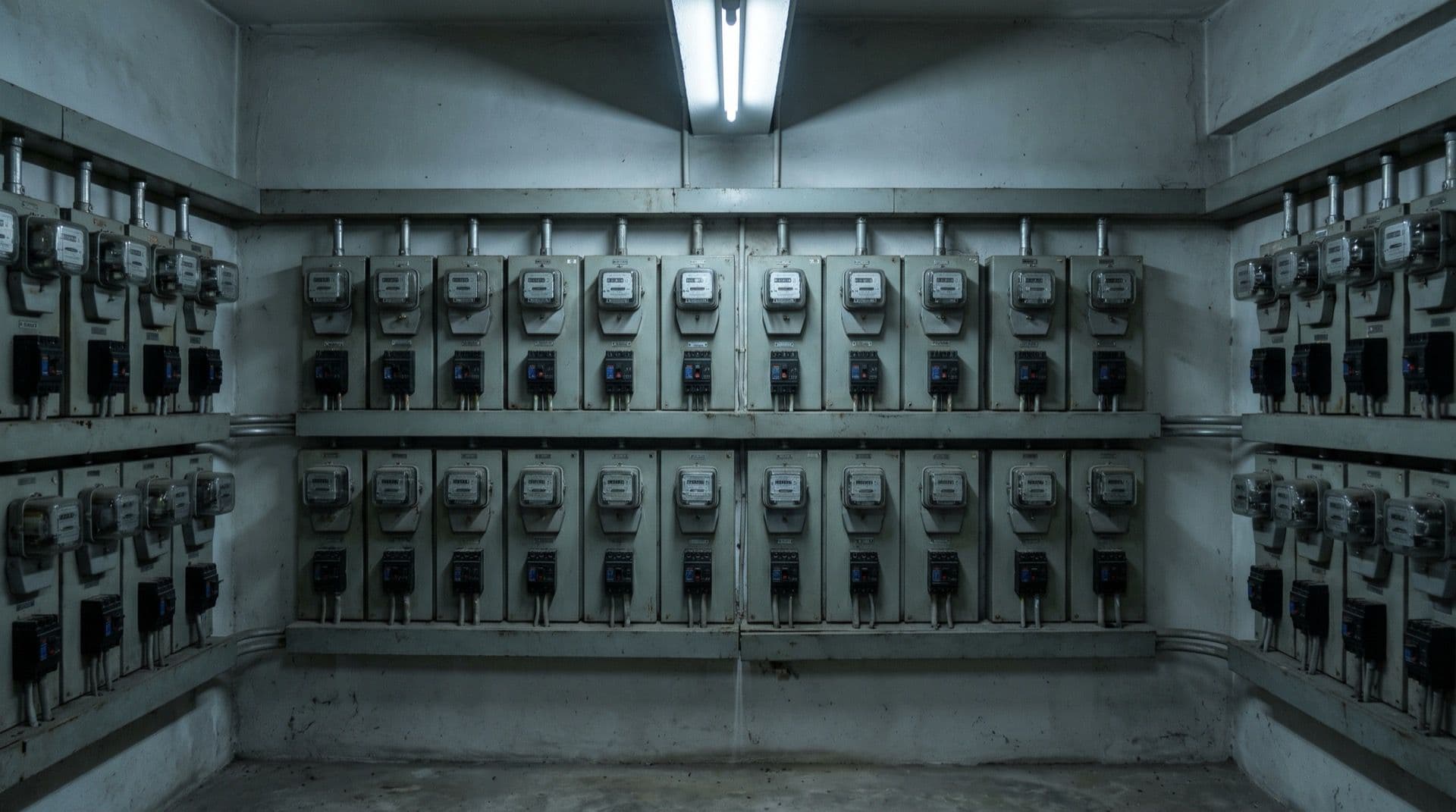
On 28 August 2023, the Johor Bahru Sessions Court fined Pioneer Heritage Sdn. Bhd. RM10,000 for supplying electricity to its tenants without a valid Suruhanjaya Tenaga (ST) licence, an offence under subsection 9(1)(b) of the Electricity Supply Act 1990 that carries a further fine of up to RM100,000 per day if the offence continues after conviction. Tenant electricity billing in Malaysia is normal practice, but it is a regulated activity with a real prosecution record, and getting the legal line, the check meters and the RP4 allocation wrong is what creates that exposure.
In short
- Tenant electricity billing is normal practice in Malaysia, but it is a regulated activity, and unlicensed supply carries real prosecution risk, a Johor Bahru tenant-billing case drew a RM10,000 fine in 2023.
- Getting the legal line right, cost recovery versus unlicensed supply, decides whether your billing model is compliant.
- RP4 changed the arithmetic behind every old pass-through billing formula, so formulas set up before July 2025 need rechecking.
- Some charges, common-area losses, capacity and network allocation, are not measured by any single tenant meter and need an explicit allocation rule.
Can you bill tenants for electricity in Malaysia?
Yes. Recovering your actual electricity cost from tenants through check meters (private sub-meters behind the TNB meter) is standard practice in Malaysian offices, malls and industrial parks. What you cannot do is turn electricity into a business: selling power at a marked-up rate without an ST licence is the offence Pioneer Heritage was convicted of.
Three facts frame everything else. TNB bills one account holder: the registered customer, usually the landlord or the management body, is liable for the whole bill regardless of who consumed the energy. Cost recovery is fine, but supplying electricity as a business needs a licence; the Electricity Supply Act 1990 (Act 447) prohibits supply except under one, and ST enforces it. And RP4 changed the arithmetic: since 1 July 2025 a commercial TNB bill has five unbundled components that behave differently, so a single flat sen/kWh pass-through rate no longer tracks your true cost.
The legal line: cost recovery vs unlicensed supply
The Electricity Supply Act 1990 draws the line through its licensing regime. ST issues two broad licence classes: private installation licences, covering supply and use of energy solely on the licensee's or owner's own property, and public installation licences, covering sale and supply of electricity to any person other than the licensee. A landlord distributing power within their own building and recovering the cost operates in the private-installation world. The moment the arrangement looks like retailing electricity for profit, you are in public-installation territory, and in Peninsular Malaysia TNB is by law the sole retailer apart from a handful of Independent Distributor Licensees such as KLCC, KL Sentral and Kulim Hi-Tech Park. Those IDLs prove the point: on-selling electricity is possible, but only with a licence.
The practical rules that follow:
- Bill at your actual cost. Reconstruct the tenant's share of the real TNB bill. A markup converts cost recovery into sale of electricity.
- Put the mechanism in the tenancy agreement. State the metering basis, the tariff pass-through method, and how common-area and demand charges are apportioned.
- Manage the account-holder risk. TNB's owner-tenant FAQ gives landlords two protections: execute a Change of Tenancy (COT) so the tenant becomes the registered, liable customer, or keep the account and register on TNB e-Services to watch the tenant's usage and payment pattern. TNB's landlord-tenant booklet covers deposits and COT procedure.
The downside case is not hypothetical. In November 2025 a Sibu couple received an electricity bill of roughly RM280,000 after their tenant stole power for cryptocurrency mining on the premises. The claim landed on the account holders, not the tenant.
Check meters done right
A tenant invoice is only as defensible as the meter behind it. Malaysian billing meters follow MS-adopted IEC standards, MS 62052-11:2009 and the MS 62053 series, and must be tested and calibrated in laboratories accredited to MS ISO/IEC 17025 under the SAMM scheme. Specify accuracy class deliberately: Class 1 static meters allow up to ±1% error and Class 2 up to ±2% at unity power factor, while Class 0.5S or 0.2S is the revenue-grade choice where disputes are likely. On CT-operated meters, size the current transformers for the tenant's actual load range; a CT running at 5% of rated current measures badly no matter how good the meter is.
One expectation to set early: the sum of your check meters will never equal the TNB bill. Riser and transformer losses, common-area loads and read-cycle timing guarantee a gap. We covered the physics in why your sub-meter and TNB meter never match; the billing consequence is that you must decide, in writing, who absorbs the difference.
What RP4 did to tenant electricity billing
Under RP4, effective 1 July 2025, a non-domestic TNB bill has five line items: Energy, AFA, Capacity, Network and Retail. Each behaves differently when you pass it to tenants:
- Energy charge (RM0.2983/kWh for Medium Voltage General Commercial; RM0.3132 peak / RM0.2723 off-peak on MV TOU) is kWh-based and maps cleanly onto check-meter readings.
- AFA is also per-kWh, but it is recalculated monthly by the Energy Commission, unlike the old ICPT which moved every six months. It has swung from -4.99 sen/kWh in January 2026 to +2.59 sen/kWh in June 2026, more than 7.5 sen/kWh inside a year. A fixed tenant rate set at the start of a tenancy drifts from your true cost every single month.
- Capacity and Network charges are the trap. For MV General Commercial they total RM89.27/kW/month (RM29.43 + RM59.84), and RM97.06/kW on MV TOU, billed on the building's highest 30-minute average demand in the month. No tenant check meter measures that building-wide peak. See how the RP4 demand charges work for the anatomy.
- Retail charge is a fixed monthly account fee, trivially small but still part of true cost.
Low-voltage commercial buildings escape the allocation problem in one narrow sense: LV customers pay capacity and network per kWh (RM0.0883 + RM0.1482 = RM0.2365/kWh) rather than per kW, so everything scales with the check-meter reading. Every MV building has to allocate a kW-based cost against kWh-based meters.
Allocating what no tenant meter measures
Capacity charges, network charges, common-area consumption and distribution losses all have to be shared out by a rule rather than a reading. Three methods dominate, and each is defensible if disclosed in the tenancy agreement and applied consistently:
- By kWh share. Each tenant's metered kWh as a fraction of all metered kWh. Simple, auditable, reasonable where load profiles are similar. Its weakness: a warehouse tenant with flat 24-hour load subsidises the retail tenant whose load spikes exactly at the building peak.
- By coincident demand. Each tenant's average kW during the building's peak 30-minute interval. This is the cost-reflective method, because it charges the tenants who actually caused the capacity and network charges. It requires interval-capable check meters and a system that can identify the building peak window each month.
- By floor area or share units. For stratified commercial buildings, the Strata Management Act 2013 (Act 757) already requires maintenance charges to be imposed in proportion to the share units of each parcel, which makes share-unit allocation the natural statutory basis for common-area electricity in a JMB/MC context.
Central plant deserves a separate mention. A centralised air-conditioning system serving two or more parcels is likely common property under the Strata Management Act, which pushes its costs into maintenance charges rather than direct usage billing. If you intend to bill chilled water by BTU meter in a stratified building, get the legal structure checked first.
A worked example: one MV bill, three tenants
Take an MV General Commercial building in June 2026: 400,000 kWh consumed, a 1,000 kW building peak, and AFA at +2.59 sen/kWh. The TNB bill (leaving aside the small fixed retail charge):
- Energy: 400,000 kWh × RM0.2983 = RM119,320
- AFA: 400,000 kWh × RM0.0259 = RM10,360
- Capacity: 1,000 kW × RM29.43 = RM29,430
- Network: 1,000 kW × RM59.84 = RM59,840
- Total: RM218,950
Check meters read Tenant A 150,000 kWh, Tenant B 100,000 kWh, Tenant C 90,000 kWh, totalling 340,000 kWh. The remaining 60,000 kWh is common areas and losses.
Step 1 — direct variable cost. Bill each tenant their metered kWh at the actual blended variable rate, RM0.2983 + RM0.0259 = RM0.3242/kWh. Tenant A: RM48,630. Tenant B: RM32,420. Tenant C: RM29,178.
Step 2 — pool the rest. Common-area energy and AFA (60,000 kWh × RM0.3242 = RM19,452) plus capacity and network (RM89,270) form a shared pool of RM108,722.
Step 3 — allocate the pool, here by kWh share. Tenant A (44.1%): RM47,966. Tenant B (29.4%): RM31,977. Tenant C (26.5%): RM28,779.
Final invoices: Tenant A RM96,596, Tenant B RM64,397, Tenant C RM57,957. They sum to RM218,950 exactly, the audit test every billing run should pass: nothing marked up, the whole TNB bill and only the TNB bill recovered. Note the effective rate is about RM0.64/kWh against a headline energy rate of RM0.2983; tenants who only see the energy rate will dispute invoices unless the method is documented.
Automating tenant invoices with a Billing & Tariffs engine
For the full mechanics of a TNB bill, see our free course Understanding Your Electricity Bill.
Doing that arithmetic once in a spreadsheet is fine. Doing it every month, across a portfolio, with an AFA that changes monthly and a demand peak that moves, is where errors creep in and disputes start. This is what the Billing & Tariffs module in CobiNeural does: it holds the current TNB tariff and TOU plans, reads interval data from each tenant's check meter, applies your allocation rule for capacity, network and common-area costs, and generates tenant invoices with the calculation trail attached. Because the same platform runs energy monitoring and anomaly detection, a stuck or drifting check meter surfaces as an alert before it becomes a billing dispute. CobiNeural runs in Malaysian commercial buildings and industrial sites such as Mosca Malaysia, standalone or as an overlay on an existing BMS or SCADA system.
FAQ
Frequently asked questions
Ask us about this topic
Something in this article you want to dig into — or a situation in your own building it doesn't quite cover? Send us your question. We don't run public comments; the team replies to you directly by email.