
Blog
How Much Does a BMS Cost in Malaysia?
There is no single price for a building management system in Malaysia. Here are the cost drivers - point count, integration, software - and how to judge a quote.
 Tan Kok XinBMS & Building Technology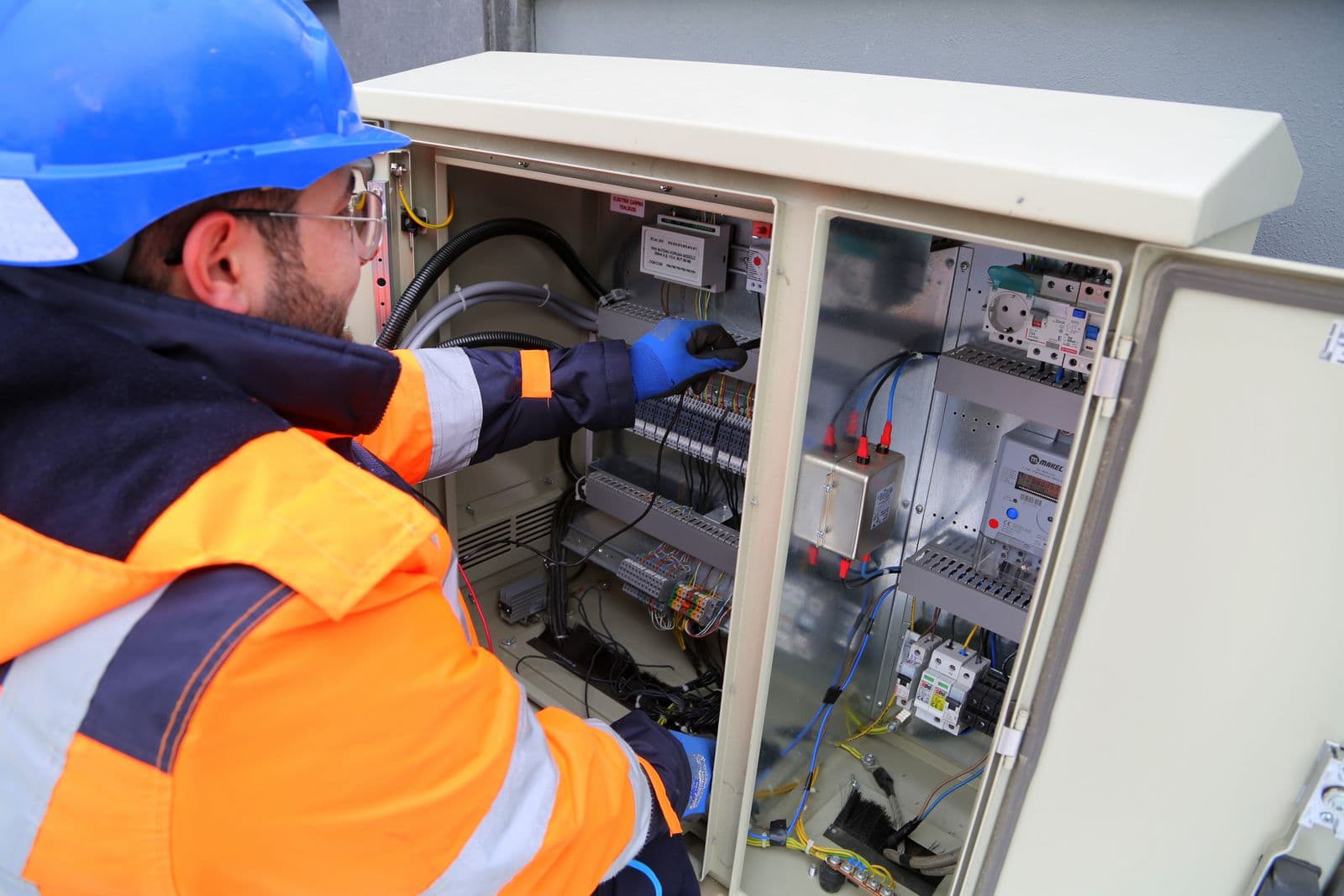
What a BMS costs in Malaysia, and what drives the price
There is no single sticker price for a building management system in Malaysia, and any contractor who quotes one before walking your plant is guessing. BMS cost is driven by scale and complexity, not floor area alone, so the honest answer is a range that depends on a handful of variables you can estimate before you tender.
The biggest cost driver is the point count: the number of physical inputs and outputs the system monitors and controls. Every temperature sensor, valve actuator, status contact, and meter is a point, and points dictate controllers, wiring, and commissioning hours. A small office retrofit might have a few hundred points; a hospital or manufacturing plant runs into the thousands. When you compare quotes, compare cost per point, because that normalises wildly different building sizes onto a single number you can actually judge.
The five things you are paying for
A BMS quote bundles costs that are worth separating, because they behave differently and some are negotiable while others are not:
- Field devices: sensors, actuators, valves, meters. Scales directly with point count and the mechanical scope.
- Controllers and panels: the DDC controllers, I/O modules, and enclosures. Driven by point count and how the building is zoned.
- Integration: getting chillers, gensets, power meters, and any existing BMS, PLC, or SCADA to talk to the head-end. This line balloons when equipment uses proprietary protocols, which is the strongest argument for specifying open protocols (BACnet, Modbus) up front.
- Software and head-end: the supervisory platform, graphics, and any analytics or energy management layer.
- Commissioning and labour: point-to-point checkout, sequence testing, and tuning. Skimping here is where cheap installs turn into years of nuisance alarms.
Cabling and installation labour in Malaysia stays comparatively affordable, but the imported side of a BMS has been climbing. Controllers, sensors, and software are priced in foreign currency, so a weaker ringgit raises the landed cost of every panel. Since 2022, global supply-chain disruption, shipping-route conflicts, and electronics shortages have pushed component and freight prices up, and licensed software adds its own yearly increases on top. Broad inflation on materials compounds all of it. That mix (cheap local labour against rising imported hardware and software) is why two identically sized buildings can land at very different totals, and why a budget figure from a few years ago no longer holds.
Retrofit versus new build
New construction is cheaper per point because the controls are designed and wired alongside the mechanical works. A retrofit carries extra cost for working around an occupied building, integrating equipment that was never meant to be networked, and sometimes replacing field devices that have aged out.
The cost-control move on a retrofit is to not rip out everything. A system that deploys as an intelligent overlay on existing BMS, PLC, and SCADA keeps working hardware in service and spends your budget on the data and control layer that actually delivers savings, rather than on re-wiring panels that already function. That single decision often moves a project from unaffordable to obvious.
How to judge whether a BMS is worth it
A BMS is a capital cost justified by an operating return, and in Malaysia the return is unusually easy to quantify. The two big levers:
- Maximum demand. Under TNB's RP4 tariff (effective 1 July 2025), demand is billed through capacity and network charges of roughly RM89/kW per month for general commercial supply. A BMS that staggers equipment and shaves the coincident peak attacks a charge that often rivals the energy charge itself.
- Energy consumption. Better scheduling, setpoint reset, and plant optimisation typically trim HVAC energy, the largest load in most Malaysian buildings.
The way to protect the investment is to insist the system measures and verifies its own savings, so the payback is a number on your bill rather than a brochure claim. That is also what keeps a BMS earning after year one. Real-world results across commercial buildings, chilled-water plants, and manufacturing sites are in our case studies.
Get a scoped number, not a guess
For how a BMS senses, decides and controls a building, see our free course Building Automation & BMS Fundamentals.
Because point count, integration scope, and existing infrastructure swing the total so heavily, the only price worth acting on is one scoped to your building and your target outcome: cutting maximum demand, meeting EECA obligations, or fixing comfort and reliability. To get a costed scope tied to a measurable result for your facility, talk to our building automation team.
FAQ
Frequently asked questions
Ask us about this topic
Something in this article you want to dig into — or a situation in your own building it doesn't quite cover? Send us your question. We don't run public comments; the team replies to you directly by email.