Blog
The Ship of Theseus, Retrofitted
Replace every chiller, controller and sensor over 25 years and is it the same building? A 2,000-year-old identity paradox, parked in your plant room.
 Tan Kok XinThe Essay Series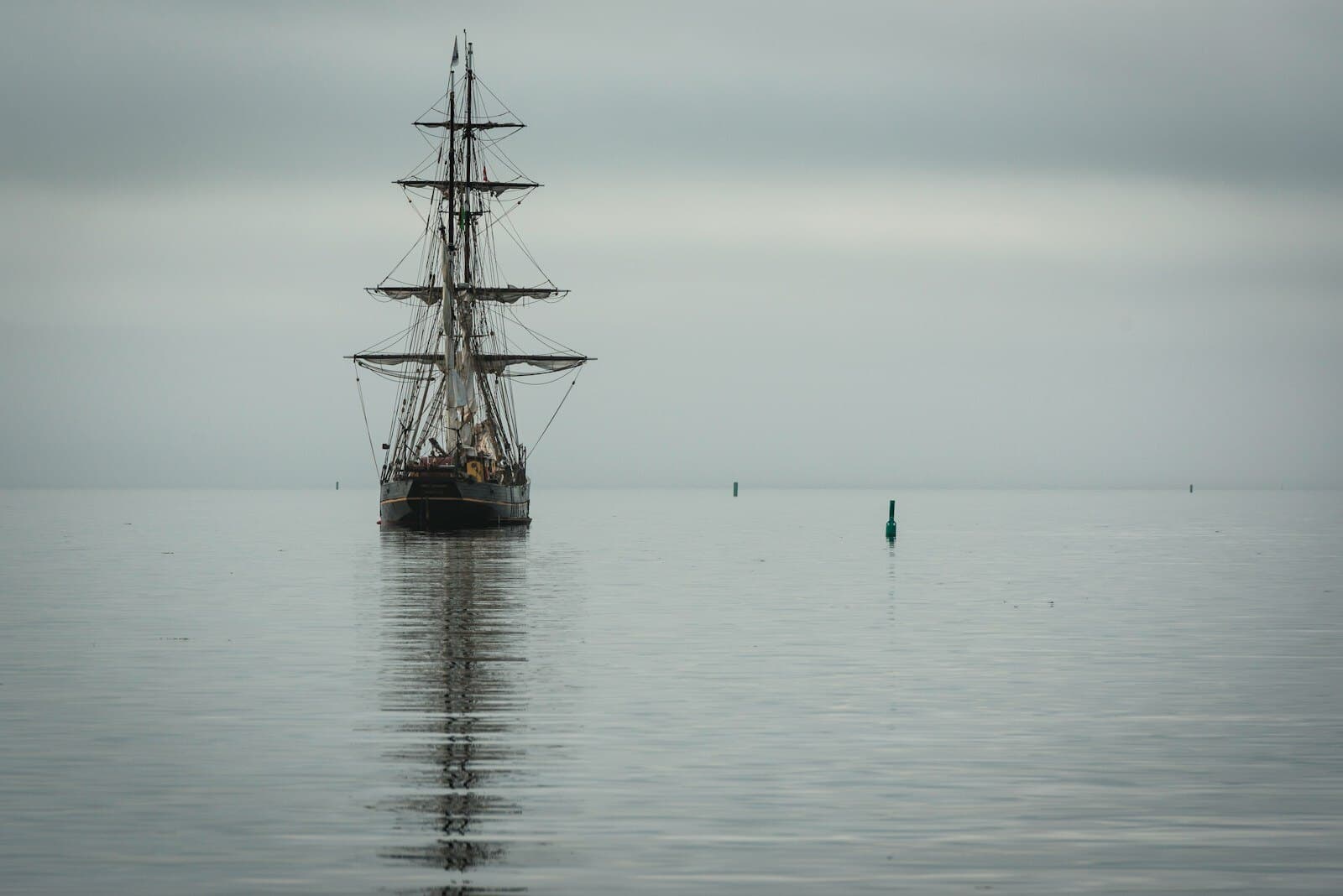
A 2,000-year-old riddle, parked in your plant room
The ancient Greeks kept a ship in Athens harbour, the one they said Theseus sailed home in, and over the years they replaced its planks as they rotted. A new board here, a new mast there, until one day not a single original timber remained. The philosophers, being philosophers, asked the obvious thing: is it still the same ship? And if you'd quietly collected all the old planks and rebuilt them into a second vessel, which one is Theseus's ship now?
You own a version of this riddle, and it's sitting in your building. You just call it a retrofit.
Your building is the ship
Give any building twenty-five years. The chillers get replaced. The cooling towers get replaced. The pumps, the valves, the actuators, the sensors. The BMS head-end is swapped for something that isn't end-of-life. The controllers go from one protocol generation to the next. The facilities manager who knew the place retires, the contractor who installed it folds, the tenants turn over twice. Stand in the plant room after all that and almost nothing you touch was there at the start.
And yet everyone, without hesitating, calls it the same building. The lease didn't lapse because you changed the chillers. The address didn't move. Whatever "this building" refers to, it clearly isn't the hardware, because the hardware is exactly the part that has completely changed. So what is it?
The planks were never the point
The contractor's version of the paradox is sharper than the Greek one, because it comes with an invoice. "We've replaced every controller, every sensor and the entire front end over the last decade. Is this even the same BMS we commissioned, or a new one we've been paying for in installments?" It's a genuinely good question, and the honest answer is that the BMS was never the boxes.
A building's identity doesn't live in its components. It lives in the pattern they were arranged to produce: how this particular building behaves, what its loads do across a day and a season, where it tends to drift, which corners overheat, what "normal" looks like here and nowhere else. That pattern is the thing that persists while the planks come and go. It's also, conveniently, the thing most buildings throw away every time they refit.
How buildings lose themselves
Here's where the metaphor stops being charming and starts costing money. Most retrofits are amnesia events. The old system is ripped out, and with it goes the accumulated knowledge of how the building actually ran. The new system arrives factory-fresh and clueless, and the building spends the next two years relearning, the hard way, things it already knew. Every rip-and-replace resets the memory to zero.
That's the real tragedy in the paradox. It was never about the planks. The Greeks could swap timber all day and still have Theseus's ship, because the ship's identity was carried in something continuous: its shape, its name, its story, the fact that each new plank was fitted to match the one it replaced. Lose that thread, replace the whole thing in one go from a different blueprint, and you don't have a repaired ship. You have a different ship in the same berth.
Continuity is a choice, and it lives in the data
This is the quiet case for keeping a building's memory separate from its hardware. If the operating record, the baselines, the sequences, the history of how this place behaves, lives in a layer above the equipment, then you can replace every plank underneath without losing the ship. Swap a chiller and the platform still knows what the plant should be doing. Change the controllers and the performance history carries straight across. The overlay model is, underneath the engineering, an answer to a metaphysics problem: it puts the building's identity somewhere the renovations can't reach.
It's also why open protocols matter more than they look. They're what let the next plank fit the hole the last one left, from any supplier, so continuity doesn't depend on a single shipwright still being in business. A building locked to one vendor isn't preserving its identity. It's renting it.
A Smart Operation Platform is, in this light, the thread the Greeks were missing made literal: the place a building stays itself while everything physical about it is gradually replaced.
So which ship is yours?
The honest resolution to the paradox is that a thing persisting through time was never the same atoms. It's the same continuous story, maintained on purpose. A building is its pattern, its memory, its accumulated sense of how it works, and the steel and copper are planks you'll go on replacing for as long as it stands.
You will retrofit this building many times before you're done with it. The only real question the old Greeks left you is whether, on the far side of all those changes, it's still recognisably itself, or just newer equipment in the same berth that has to be introduced to its own job from scratch. That part is up to you, and it's decided long before the new chiller arrives. If you'd like to keep your building's memory across its next refit, we're happy to talk it through.
FAQ
Frequently asked questions
Ask us about this topic
Something in this article you want to dig into — or a situation in your own building it doesn't quite cover? Send us your question. We don't run public comments; the team replies to you directly by email.