
Blog
The Tragedy of the Thermostat
The office thermostat is unwinnable, and the international comfort standard says so in writing. A field guide to why no room is ever the right temperature.
 Tan Kok XinThe Essay Series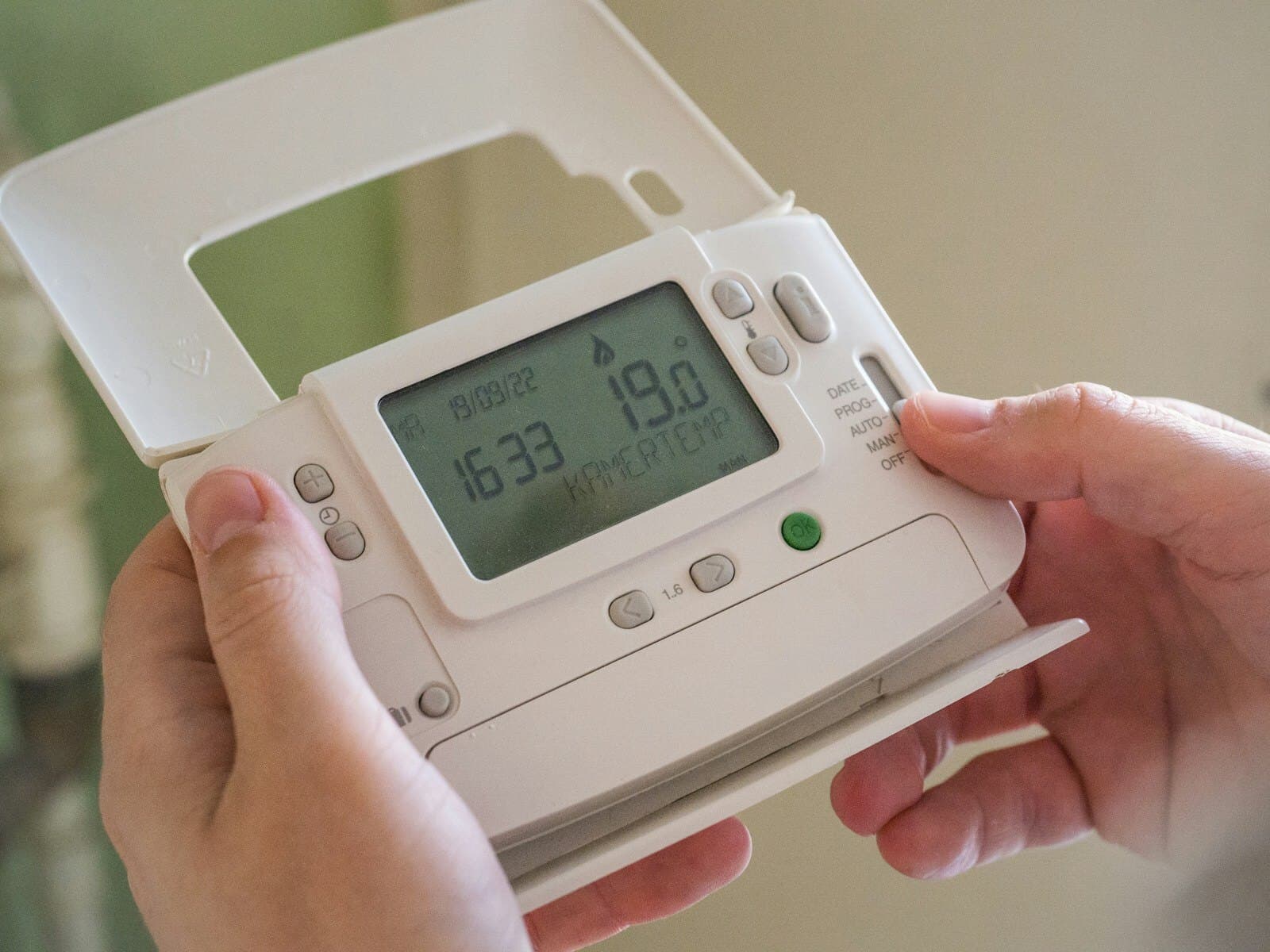
The office thermostat is a battlefield
Somewhere in your building, right now, someone is cold. Two desks over, someone else is too warm and has quietly cracked a window. A third person has brought a cardigan to work in a country that sits a few degrees off the equator. The thermostat reads 23°C, a number chosen to offend everyone equally, and by mid-afternoon someone will have nudged it down, someone else will have nudged it back up, and a small cold war will resume that has no winner and no armistice.
This looks like a building problem. It's a philosophy problem wearing a building's overalls.
In short
- An office thermostat setting can never be comfortable for everyone at once, since comfort varies person to person by more than a single number can satisfy.
- The tragedy of the commons plays out at the thermostat: everyone has an incentive to nudge it their way, and the shared resource, comfort, degrades for the group.
- Malaysia adds its own twist: office workers in a tropical country often dress for an artificially cold indoor climate.
- The fix is not a perfect setting but an honest, visible negotiation over what the building is actually optimising for.
There is no such thing as "comfortable"
We talk about room temperature as though comfort were a property of the room. It isn't. Comfort lives in the person, and people refuse to be standardised. Your metabolism runs hotter than your colleague's. You're wearing a shirt; she's in a blazer. He just walked in from the carpark; she's been sitting still for three hours. One desk catches the draught from a diffuser, another bakes near the glass. Same air, same number on the wall, four different verdicts.
The standard engineers actually design comfort against, ISO 7730, quietly concedes the whole thing. It models comfort with an index called PMV and its companion PPD, the predicted percentage of people dissatisfied. The punchline is in the arithmetic. Even at the mathematically perfect temperature, the model floors out at around 5% dissatisfied. Five percent, on the best day physics allows. The international standard for keeping people comfortable opens by admitting you cannot keep everyone comfortable. The thermostat war isn't a fault in your air conditioning. It's baked into what it means to be a person in a shared room.
The tragedy of the commons, at 23 degrees
A shared thermostat is a commons, and commons get fought over. Everybody wants it set to their own ideal, nobody actually owns it, and the dial becomes a contested little patch of public land. The person who walks over and changes it isn't being difficult. They're rationally pursuing their own comfort using the only lever in reach, which is exactly how a commons gets trampled.
Facilities teams know this so well that one of the building industry's quiet open secrets is the dummy thermostat: a box on the wall, wired to nothing, installed so people have something to adjust. They press the buttons, they feel the agency, and the building carries on doing whatever it was already doing. It is equal parts hilarious and bleak that the most reliable fix anyone found for the comfort war was to hand people a placebo. The need being met was never thermal. It was the need to feel in control of your own afternoon.
The Malaysian twist: cardigans at the equator
Walk into a KL office tower and you'll find people in jackets while it's 33°C outside. We have somehow built a civilisation that air conditions tropical buildings down to the point where staff dress for autumn, then pays the electricity bill for the privilege of being slightly miserable.
Most of this is a misdiagnosis. The thing that makes a tropical office feel clammy is usually humidity, not temperature, and dragging the setpoint down to 18°C is a brute-force attempt to fix a moisture problem with cold. It overcools the room, runs the chiller plant ragged, and still doesn't feel right, because the air is dry-cold rather than comfortable. Two people lose: the one shivering, and the one signing the TNB bill. We get into the mechanics of this in air-side HVAC efficiency and why air and water sides have to work together.
You can't end the argument, only make it honest
If the standard itself promises 5% unhappy, the goal was never universal contentment. It's to stop fighting blind. A single number on a single wall, governing a floor full of different bodies in different micro-climates, is a guarantee of conflict. What helps is seeing the actual conditions: temperature and humidity and occupancy, zone by zone, instead of one disputed dial standing in for all of it.
Once you can see that the east side runs three degrees warmer after lunch, or that the real problem on level 12 is 70% humidity rather than the temperature everyone keeps blaming, the argument changes from a turf war into something you can actually settle. That is the unglamorous work behind CobiNeural's IAQ and occupancy insights: not to win the thermostat war, which is unwinnable, but to replace the shouting with a picture everyone can look at.
Comfort is a negotiation, not a setting
The deepest thing the thermostat teaches is that some problems don't have a solution, only a management. You will never find the temperature that makes everyone happy, because it doesn't exist, any more than there's a single meal that satisfies an entire office. What you can do is understand the room well enough to make the trade-offs deliberately, keep the genuinely miserable cases rare, and stop spending money making people cold in the name of comfort.
The thermostat will stay contested. It's the most democratic object in the building, which is to say nobody is ever fully happy with it. The least you can do is argue with the lights on. If you'd like to see what your own floors are actually doing, temperature, humidity and all, we're happy to take a look.
FAQ
Frequently asked questions
Ask us about this topic
Something in this article you want to dig into — or a situation in your own building it doesn't quite cover? Send us your question. We don't run public comments; the team replies to you directly by email.