Commercial · Case Study
Aurelia Residences: Demand-Controlled Carpark Ventilation
Cobler automated the car park ACMV at Aurelia Residences by Shang Properties. Fresh air intake, exhaust and jet fans are controlled from carbon monoxide sensing, so the car park ventilates on demand instead of running flat out.
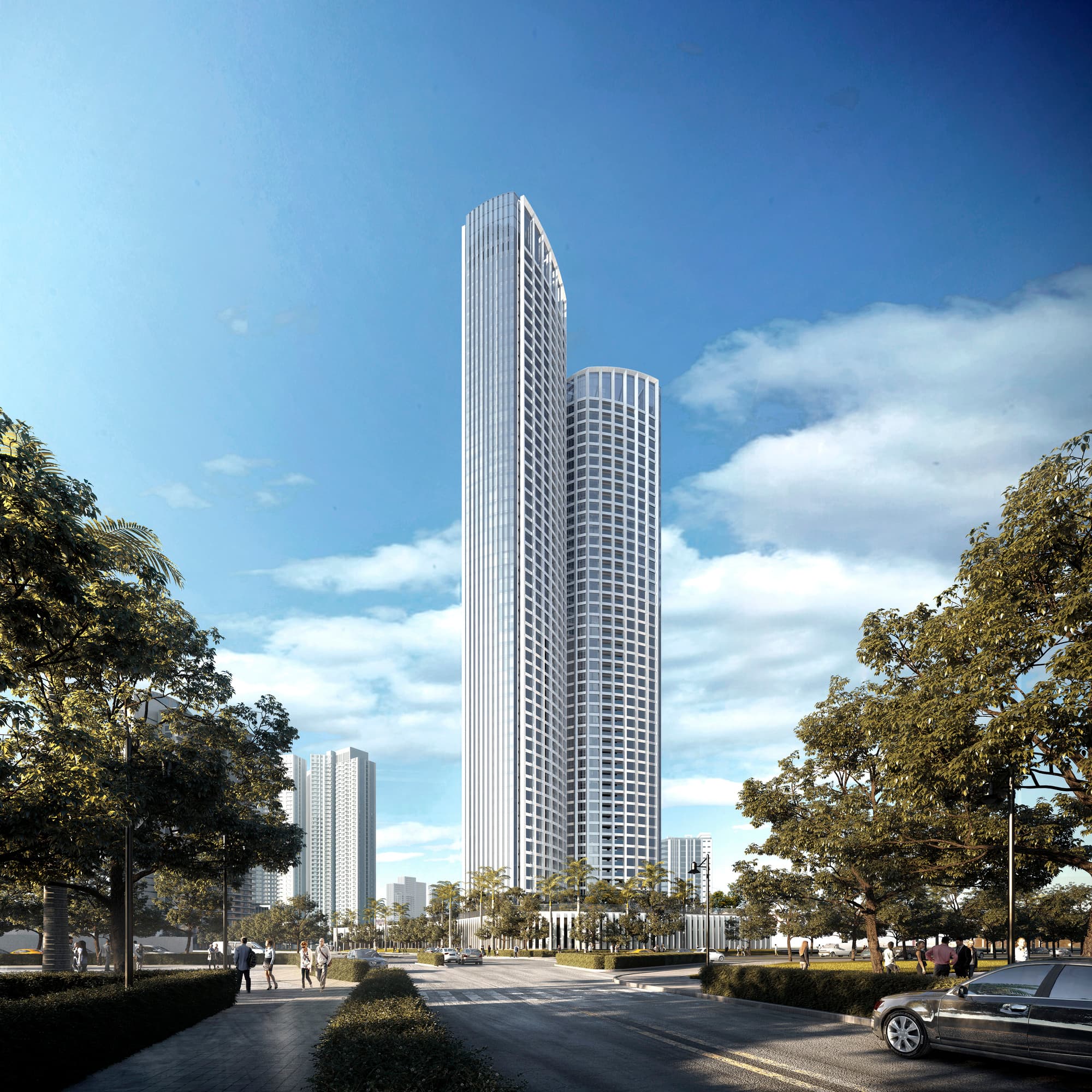
Cobler automated the car park air-conditioning and mechanical ventilation (ACMV) at Aurelia Residences, a Shang Properties development. Fresh air intake, exhaust and jet fans are now controlled together from carbon monoxide (CO) sensing, so the car park is ventilated according to demand instead of running at full power all the time.
The site
Aurelia Residences is a high-end residential development by Shang Properties. Cobler delivered the automation for its enclosed car park ventilation. An enclosed car park must run mechanical ventilation continuously to keep carbon monoxide and vehicle fumes within safe limits. This makes it one of the larger electrical loads in the building that never switches off.
The problem
Car park ventilation is safety equipment first. It clears carbon monoxide and other vehicle fumes, and in a fire it becomes part of the smoke-control system. Because the stakes are high, the simplest approach is to run every fan at full speed all the time. That is also the most wasteful approach. The fans are a large, constant load, and for most of the day the car park is quiet and the air is much cleaner than full ventilation assumes.
The task was to reduce that energy use without ever compromising air quality or fire mode. The system has to ventilate according to what the air needs at each moment, and still be able to ramp up to full power and switch to smoke control immediately.
What we did
Cobler automated the car park ACMV so it ventilates according to demand. Three parts of the system are controlled together:
- Fresh air intake is adjusted to bring in outside air in line with demand, instead of holding a fixed, maximum supply.
- Exhaust follows the actual air quality in the car park. It increases as vehicle activity and fume levels rise, and reduces when the car park is quiet.
- Jet fans are staged and sequenced to move air across each deck towards the exhaust points. Only the fans needed to keep air moving where it matters are run, rather than every fan at once.
The controls are linked to carbon monoxide sensors across the car park, so ventilation follows real air quality. The fire and smoke-control sequences remain ready to take over as soon as they are triggered.
What changed
- The car park stays clear and safe.
- It is ventilated according to demand instead of at full power around the clock, which removes a large, continuous and easily overlooked load from the building.
For a development like Aurelia Residences, this is building automation that residents never notice and the operator sees on the bill.
See how the same control approach works at other sites in our case studies, or talk to us about car park and ACMV controls for your development.
Ready to achieve similar results?
Let's discuss how CobiNeural can transform your energy management.