Hospitality · Case Study
Grand Swiss-Belhotel Melaka: Digital Power Meters for EMS
A 211-room Melaka hotel is metering its function hall so events can be billed on actual energy used, and capturing a chiller baseline before replacement. Delivered with Cape Renewables Sdn Bhd, completing October 2026.
Grand Swiss-Belhotel Melaka is installing digital power meters so it can bill function-hall events on the energy they actually use, and so it can measure its old chiller before a new one replaces it. Cobler is delivering the project with Cape Renewables Sdn Bhd, and implementation is scheduled for completion in October 2026.
The site
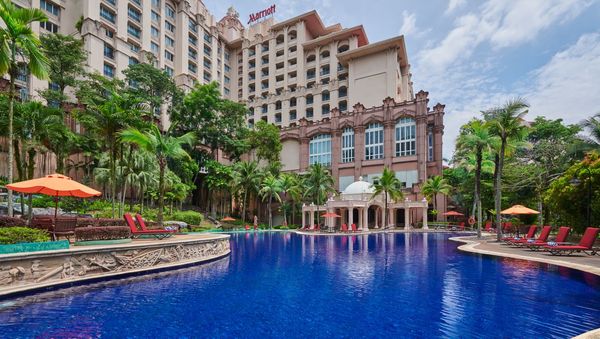
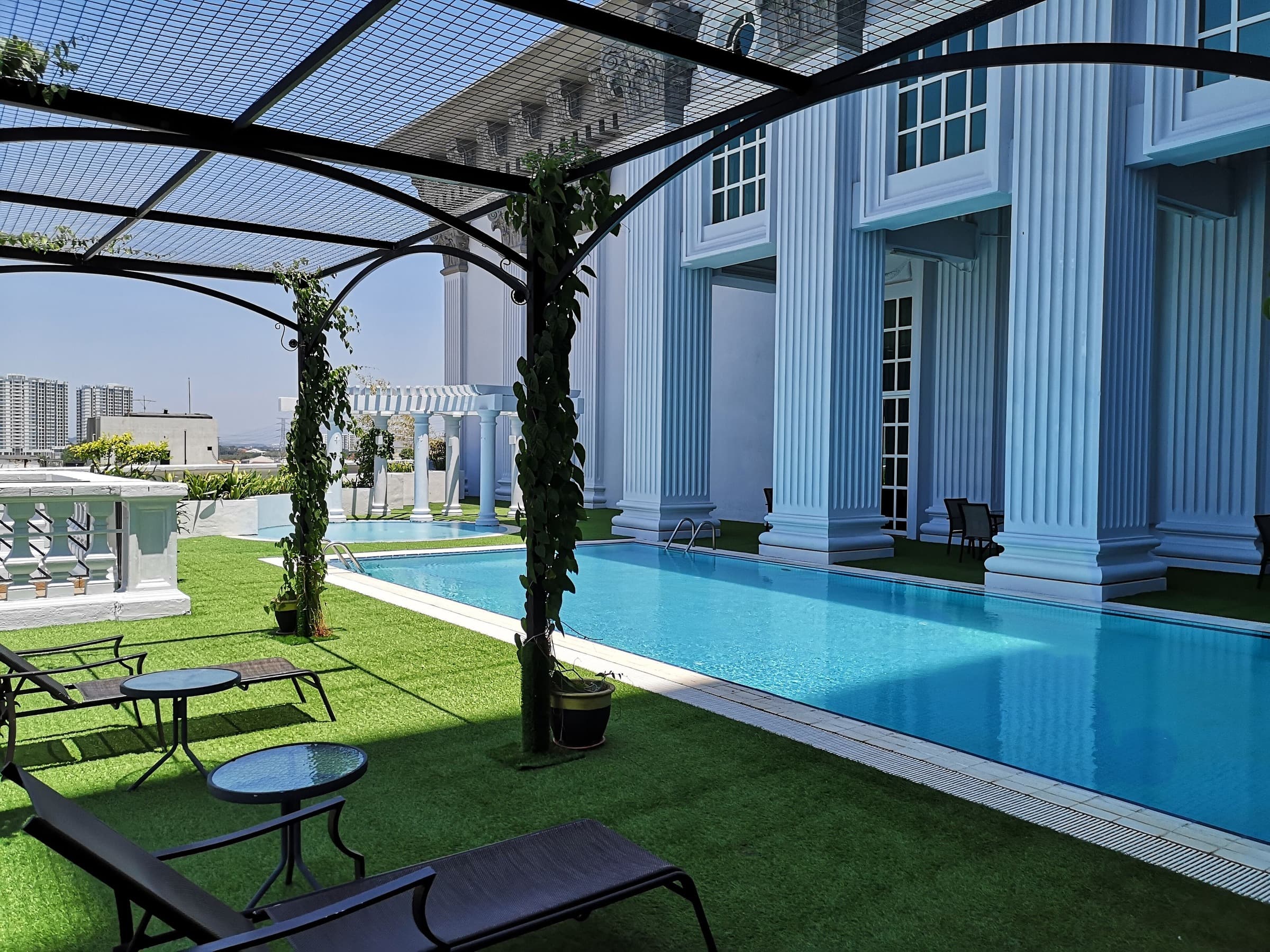
Grand Swiss-Belhotel Melaka is on Jalan Hang Tuah, a few minutes from the UNESCO-listed heritage core and Jonker Street. It is a 4-star hotel with 211 rooms, two restaurants, function space, a pool and a gym. Architecturally, it is best known for what the hotel describes as Malaysia's largest stained glass dome.
None of this switches off. A hotel is one of the few building types that still draws a meaningful electrical load at 3am. Its energy use depends less on floor area than on occupancy, kitchen schedules and function bookings.
The problem
The function hall is billed for the room, not the power
This commercial problem is what started the project.
When the hotel rents out its function hall, the rate covers the space but not the electricity. A full-day conference uses far more power than a half-day meeting in the same room. The hall is at capacity, air handling runs hard from early setup to late teardown, and the client brings in staging and lighting. On a single incoming meter, both events look the same, and the hotel absorbs the difference.
The team wanted to change this. They wanted to meter the function space properly, see what each event actually uses, and recover that cost from the client based on real energy use rather than a flat assumption built into the rental rate.
A chiller replacement
The second reason was a chiller replacement. A new chiller was scheduled for installation, and the hotel wanted evidence of how it performed. That evidence has to be collected in time: once the old machine is removed, it can no longer be measured.
Maximum demand
Behind both sits the usual demand problem. Under RP4, the Tenaga Nasional Berhad (TNB) tariff structure in force since 1 July 2025, the demand part of a Malaysian commercial bill is charged through Capacity and Network charges. For the relevant medium-voltage (MV) categories these currently total RM89.27 per kW (MV General) and RM97.06 per kW (MV Time of Use, where only the 2pm to 10pm weekday peak window counts). The charge is set by the single highest half-hour peak in the month. One bad half hour sets the price for the whole month, and a monthly total does not show which half hour it was or what was running at the time.
What we installed in Phase 1
Cobler is delivering the project with Cape Renewables Sdn Bhd. Phase 1 covers two things: the network communication layer that carries data into CobiNeural, and the digital power meters (DPMs) that feed it for both energy management and billing.
There are six metering points, each chosen to answer a specific question:
- Phase 1 main incoming gives a verifiable total that reconciles with the TNB bill. If sub-metering does not match the invoice, people stop trusting it the first time they check.
- Phase 1 chiller 1 and Phase 2 chiller 2 are the two largest single loads in the building, and they decide the shape of the demand curve.
- Phase 1 AHU and Phase 2 FCU and lighting DB together cover the air handling and lighting distribution serving the rented spaces. (AHU is an air handling unit, FCU a fan coil unit and DB a distribution board.) This is what makes event-level billing possible: the energy used by a function is the energy used by the equipment that cools and lights it.
How the meters are installed matters as much as where they go. The current transformer (CT) ratios were sized to the measured running current rather than the breaker rating. A CT sized to the breaker spends most of its time at the bottom of its accuracy range, which turns the overnight baseline into noise. The meters communicate using Modbus RTU over RS-485 to a gateway. Switchroom work is scheduled around the hotel's operating hours, so board shutdowns never affect a guest floor or a live function.
Implementation is scheduled for completion in October 2026.
The key decision: meter before the new chiller
The most important decision on this job was about timing: install the meters before the new chiller, or after it?
On a working hotel with a plant replacement in the same period, there are real reasons to meter last, once the mechanical work is finished and the switchroom is settled. Metering too late causes no visible problem at the time, which is why the risk is easy to miss.
The project agreed to meter first, because of measurement and verification (M&V). If the DPMs go in after the new chiller is running, there is no baseline. The new plant can only be compared with old utility bills, which reflect different weather, occupancy and function bookings, so the comparison is not valid. Metering first gives a real before-and-after on the same instruments, at the same points, through the same platform. The chiller's performance becomes a measured figure rather than a claim.
The same applies to almost every retrofit: metering should be the first trade on a plant upgrade, not the last. Any project replacing major equipment should agree the sequence at kickoff, in writing, with every party working from the same programme. The window for a baseline opens once and does not reopen.
What the metering gives the hotel
- Billing & Tariffs turns function-hall consumption into a charge a client can be billed for. The hotel recovers energy costs on actual use instead of absorbing the difference between a light booking and a heavy one.
- Insights → Energy tracks consumption, power factor and the Max Demand KPI (key performance indicator) by location and by equipment, at interval resolution. This turns a total into a load profile: the overnight baseline, the morning ramp-up, and the shape of a peak while it is still forming rather than after it has been billed.
- Comparing similar days is where patterns show up: a busy Saturday against a quiet Tuesday, one function against another in the same room, or this month's chiller profile against last month's.
- Plan & Verify records the chiller before-and-after as a documented M&V exercise rather than an argument.
- Alerts sends anomalies to the engineering team by WhatsApp or email. This is how a chiller left running for a closed function room is caught the same day.
- Reporting produces scheduled, documented reports for Energy Efficiency and Conservation Act (EECA)-aligned reporting and ISO 50001 management review, from a record that is auditable by design.
Where the project stands
Phase 1 is under way, with implementation scheduled for completion in October 2026. As each board is metered and connected to the platform, the hotel moves from a single monthly number towards a live, sub-metered picture of its own consumption. The chiller baseline is captured before the new machine arrives, and function-hall energy becomes a figure that can be billed and backed by evidence.
Patterns come first, then optimisation. A hotel cannot plan around a peak it cannot see, and it cannot charge for energy it has never measured.
See how other operators approach energy monitoring across their portfolios, or talk to us about metering your property.
Ready to achieve similar results?
Let's discuss how CobiNeural can transform your energy management.