Hospitality · Case Study
Marriott Hotel: ACMV Retrofit with VSDs and a Centralized BMS
Cobler retrofitted a Marriott hotel's ACMV. New variable speed drives cut maximum demand by about 3.2% and energy by about 4.9%, a broken BMS was centralized, and weak cooling was traced to a duct leak and over-designed air handling.
Key Results
4.9%
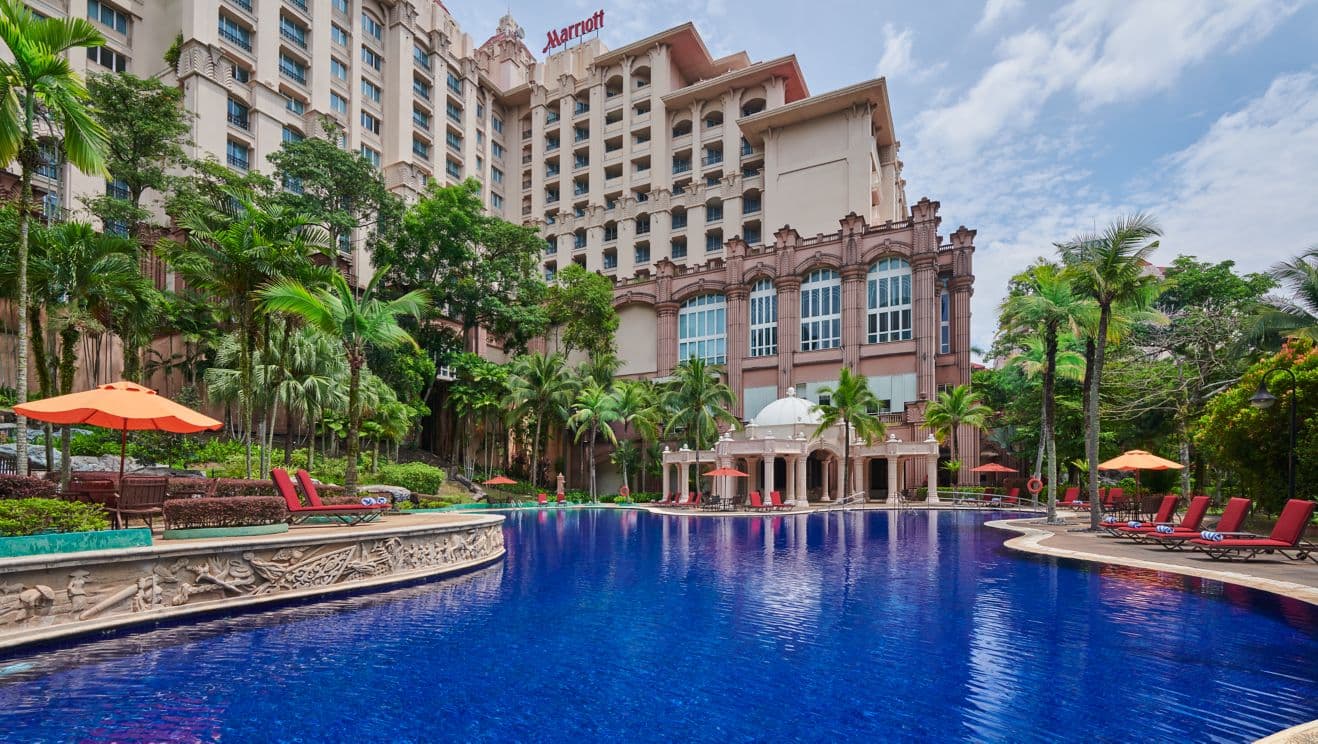
Cobler retrofitted the air-conditioning and mechanical ventilation (ACMV) system at a Marriott hotel. Comparing the months before the retrofit with the months after, average maximum demand fell by about 3.2% and average monthly energy use by about 4.9%. The work also combined a broken building management system (BMS) into one, and the new drives helped trace weak cooling to a duct leak and over-designed air handling units.
The site
Marriott operates in the upper tier of Malaysian hospitality, where guest comfort is essential and the building never closes. That comfort depends on a large ACMV system: air handling units (AHUs), fresh air intake, exhaust fans and the motors that drive them, all run by a BMS.
At this property, the BMS had become disconnected and partly broken over the years. Much of the ACMV still ran on old fixed-speed motor starters. Cobler retrofitted both.
The problem
There were two problems, and each made the other worse.
The first was the controls. The existing BMS had become a patchwork of separate systems, and parts of it no longer worked. Operators could not see or run the building from one place, so daily operation took more people, more time and more guesswork than it should.
The second was the motors. Much of the ACMV ran on across-the-line starters (direct-on-line, star-delta and auto-transformer). These start a motor hard and then run it at one fixed speed. This costs money in two ways. The current surge at start-up and the full-speed running push up the building's maximum demand, the peak that sets a large part of the Tenaga Nasional Berhad (TNB) bill. And a fixed-speed fan cannot slow down when a space does not need full airflow.
What we did
Cobler retrofitted the hotel's ACMV controls and drives and brought the whole system under one BMS.
- One central BMS. The separate, partly broken systems were combined into a single platform. Staff now see and operate the building from one place instead of moving between several screens, which makes daily operation more efficient.
- Variable speed drives (VSDs) in place of the old starters. The direct-on-line, star-delta and auto-transformer starters were replaced with VSDs. A VSD starts a motor gently, which reduces the start-up surge that raises maximum demand. It also lets each fan run at the speed the load needs instead of full speed, lowering both maximum demand and energy use.
- Air side matched to demand. With the drives and controls in place, the AHUs, fresh air intake and exhaust fans were set to run according to occupancy and indoor air quality (IAQ) instead of a fixed schedule. Comfort and IAQ are maintained while the system does less work.
CobiNeural runs over the retrofitted system, so the system's behaviour and its demand stay visible and can be verified.
What the retrofit uncovered
Once the motors were on drives and we could see the readings, the system showed problems the old setup had hidden.
Soon after the changeover, guests reported that some areas were not as cool as before. On the old fixed-speed starters, the motors drew around 40 A in normal operation. On the drives, they only reached that 40 A when we ran them at 55 Hz, above the 50 Hz the motors are rated for. The fans were running at full effort, and the spaces were still not cooling enough.
That led us past the motors to the air system. We traced the problem to a leak in the ducting that let humid air in and raised the humidity inside the duct above 70%. The extra moisture loaded the system so much that the drives ran at full speed and still could not deliver the cooling the spaces needed. The old starters had hidden this fault for years by running flat out all the time. The hotel paid for it in energy, and nobody could see why.
The drives also showed that the AHUs had been over-designed for the building. They are large enough that the system runs at a high static pressure, which makes the drives work harder than they should. The new VSDs are therefore not yet working near their potential. The savings measured so far were achieved with the drives held back in this way, so there is room for more.
A spec sheet would not have shown any of this. Putting the building on drives and live readings turned a vague "it feels warm" complaint into a specific mechanical fault in a known location. The hotel can now fix it, so the ACMV can deliver proper cooling and drier air at lower energy use.
What changed
Measure (months before vs months after) | Change |
|---|---|
Average maximum demand | down about 3.2% |
Average monthly energy use | down about 4.9% |
- The hotel runs its ACMV from one central system instead of a broken, disconnected one, which takes effort out of daily operation.
- These savings were achieved before the faults found during the work were fixed: the duct leak causing the humidity, and the over-designed air handling that holds back the new drives.
- The operator has a lower bill, a clear list of what to repair next, and a building that is much easier to run.
See how the same approach works on other sites in our case studies, or talk to us about ACMV retrofits and BMS centralization for your property. For the control work behind projects like this, see building automation.
Ready to achieve similar results?
Let's discuss how CobiNeural can transform your energy management.