Manufacturing · Case Study
Otafuku: Chilled Water Plant Control for Sauce Manufacturing
Cobler delivered the BMS for the chilled water plant at Otafuku's Malaysian sauce manufacturing operation, running the plant to demand instead of flat out.

Cobler delivered the building management system (BMS) controls for the chilled water plant at Otafuku's sauce manufacturing operation in Malaysia. The plant now runs to demand instead of at full output, which gives a lower and more predictable cooling cost.
The site
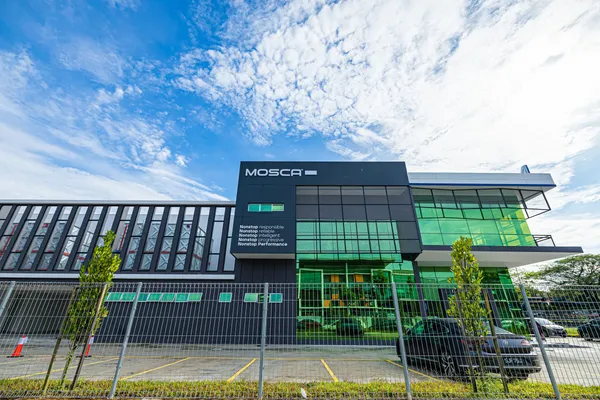
Otafuku is a Japanese manufacturer best known for its okonomiyaki and savoury sauces, with production in Malaysia. A sauce plant depends on cooling: process cooling for production and storage, and comfort cooling for the staff, all supplied by a central chilled water plant. Cobler delivered the BMS controls for that plant.
The problem
In food manufacturing, cooling is neither optional nor cheap. The chilled water plant runs long hours to hold process and room conditions. As with most plants, the simplest way to run it is to leave capacity switched on, which is also the most wasteful way.
A plant's efficiency is measured in kW/RT, the electrical power used for every refrigeration ton (RT) of cooling. It depends on running only the chillers, pumps and cooling towers that the load actually needs.
What we did
Cobler designed and delivered the building automation and BMS for the plant. The chillers, pumps and cooling towers are controlled as one coordinated system rather than as separate machines.
- Chillers are staged to the plant's real cooling demand and kept near their efficient operating points, instead of running spare capacity.
- Chilled water pumping, condenser water pumping and cooling tower output follow the load. The plant holds a good delta-T (the difference between supply and return water temperature), so the pumps and fans are not overworked.
- CobiNeural monitors the plant and tracks its kW/RT live, giving the team a continuous, measured view of how the plant is performing.
What changed
The plant runs to demand instead of at full output and holds its efficiency across the production day. For a manufacturer whose process depends on cooling, this means a lower, more predictable operating cost and a plant the team can see and trust.
See how the same control approach works on other plants in our case studies, or talk to us about chilled water plant control for your facility.
Ready to achieve similar results?
Let's discuss how CobiNeural can transform your energy management.