
Blog
Malaysia's 24 Degrees Air Conditioning Rule, Explained
On 2 April 2026, Malaysia ordered all government offices to set air-conditioning no lower than 24C. The facts, the RM maths under RP4, and why the rule failed in 2011 and 2023: verification.
 Tan Kok XinHVAC & Chiller Plants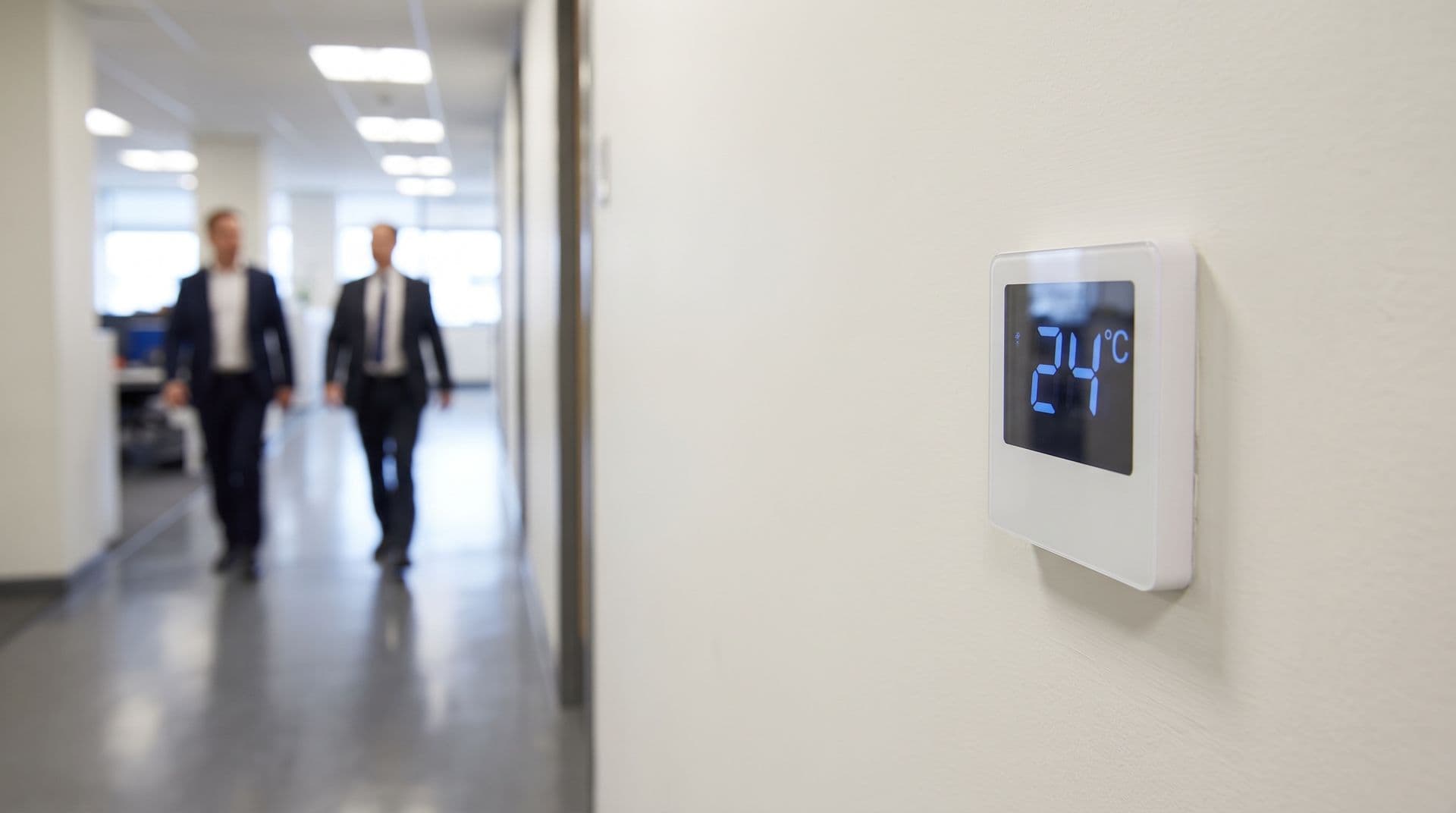
On 2 April 2026, Malaysia ordered air-conditioning in all government offices to be set no lower than 24C. Deputy Prime Minister Datuk Seri Fadillah Yusof announced the directive at a briefing on the global energy crisis (The Star, 2 Apr 2026). Fadillah also holds the Energy Transition and Water Transformation portfolio. He paired the order with a call for civil servants to wear batik and other climate-appropriate attire.
The 24 degrees air conditioning rule is one part of a wider energy-saving package. The trigger: the West Asia conflict and disrupted oil shipping through the Strait of Hormuz.
The news is simple. The engineering is not. Malaysia has ordered 24C before, and the setpoint drifted back each time. Here are the facts first, then the part the coverage skips: what it takes to make a setpoint hold.
In short
- Malaysia's 24C directive, ordered 2 April 2026, applies to government offices; it does not by itself guarantee 24C is what occupants actually feel.
- Malaysia first tried a similar 24C order in 2011, and it did not stick, mainly because setting a thermostat number is not the same as verifying delivered temperature.
- Humidity matters as much as temperature for comfort in the tropics, so 24C with poor dehumidification can still feel uncomfortable.
- Verifying compliance requires actual measurement, not just checking what a thermostat display shows.
What does the 24C directive actually say?
The core instruction: air-conditioning in all government offices must be set at 24C or higher. Fadillah said Malaysia's energy position remains stable and the move is pre-emptive, not a crisis response.
It sits inside a bigger package. A day earlier, the Prime Minister announced a Cabinet decision: work-from-home for the public sector, statutory bodies and GLCs from 15 April 2026 (Malay Mail, 1 Apr 2026). The Public Service Department was tasked with the details.
Some details remain unconfirmed, so we will say so plainly:
- Scope. Press reports apply the 24C setpoint to government offices. GLCs and statutory bodies are explicitly covered by the WFH measure, and many are following the setpoint administratively, but we have not seen a document that formally binds them to it.
- Instrument. No gazette or published circular text has surfaced. This is a government directive announced after Cabinet-level decisions, not a gazetted regulation.
- Exemptions. The 2011 version exempted critical facilities such as hospitals. The same is expected for 2026, but not yet confirmed in print.
What we can see is how it cascades. UMPSA's Bursar circular of 8 May 2026 sets air-conditioning "within 24C" and limits AC hours to 8.30am until 5.00pm (UMPSA circular). AC must go off during lunch and in unused rooms, and the rules extend to the university's subsidiary companies.
The circular cites a Higher Education Ministry expenditure-control directive of 18 March 2026. Enforcement runs through heads of departments, not a national inspectorate.
How much does 24 degrees air conditioning actually save?
Roughly 7 per cent of cooling energy per degree raised. A Bernama expert analysis puts the move from 22C to 24C at about 14 per cent savings in air-conditioning energy (Bernama via Borneo Post, 5 Apr 2026). That works out to a 7 to 8 per cent cut in whole-building electricity.
Treat this as a rule of thumb, not a law. The government's own 2011 figure was 4 to 7 per cent per degree, and the real number depends on your chiller plant, envelope and weather.
The base is large. When Malaysia first issued this rule in 2011, the minister cited air-conditioning as about 40 per cent of office electricity consumption (source linked in the next section).
Under TNB's RP4 tariff, the saving lands on two bill lines. Medium-voltage commercial energy runs around 29 to 31 sen/kWh plus AFA. The old Maximum Demand charge is now Capacity plus Network charges: RM89.27/kW on the general tariff or RM97.06/kW on Time-of-Use.
The ToU peak window of 2pm to 10pm on weekdays sits on top of peak cooling hours. New to these line items? Start with how to read a TNB bill.
A worked estimate for one office floor:
- Monthly consumption: 100,000 kWh, medium-voltage commercial.
- Cooling share at 40 per cent: 40,000 kWh.
- Saving from 22C to 24C at about 14 per cent: 5,600 kWh.
- Energy line at about 30 sen/kWh: roughly RM1,680 a month.
- If the chiller's share of monthly peak demand drops 10 kW: another RM890 to RM970.
- Total: in the region of RM2,600 a month, or over RM30,000 a year.
This is a worked estimate from published ratios, not a measured figure. Your numbers will differ, which is why measurement matters.
Malaysia first ordered 24C in 2011. Why did it never stick?
Because nobody measured it. On 11 August 2011, all government buildings were ordered to set air-conditioning no lower than 24C (mStar). That order came through a circular from the Chief Secretary to the Government, with hospitals exempted.
In 2023 the rule was announced again, this time as 24 to 25C with a relaxed batik dress code. 2026 is the third announcement.
The policy was never the problem. The energy expert quoted by Bernama made the same point about the 2026 round: the challenge is monitoring compliance and the "not my money" mindset of occupants. A circular sets a number. Nothing in the circular checks that number a year later.
Why setting 24C is not the same as delivering 24C
A BMS screen showing 24C can coexist with 21C meeting rooms and 27C corner offices. The thermostat measures one point, usually at the return air or a wall sensor. Workstations live somewhere else.
Three common gaps: cold air stratifies, so temperature at desk height differs from the sensor. Perimeter zones take direct solar gain and run hot in the afternoon while interior zones overcool. And zones sized for a 2005 floor plan now serve a 2026 layout, so some VAV boxes hunt while others cannot keep up. Fixing this is air-side work, covered in our guide to HVAC optimisation in Malaysian buildings.
The consequence: nudging one setpoint can leave half the floor uncomfortable, which triggers the next problem.
How do you actually verify compliance?
With locked setpoints and interval data, not memos. Occupants fight setpoints. Local overrides, portable fans on thermostats, and quiet resets by contractors erode a 24C order within weeks. We wrote about this dynamic in the tragedy of the thermostat.
The circulars specify no measurement mechanism. UMPSA makes heads of responsibility centres answerable for non-compliance, but gives them no tooling to see what their zones are doing.
The enforcement stack that works is boring:
- Lock out local setpoint changes in the BMS.
- Trend every zone temperature at 15-minute intervals.
- Alert when a zone stays outside the band for more than an hour.
That turns compliance from an annual walk-around into a live number.
Is 24C comfortable in the tropics? Humidity matters more
Yes, if humidity is controlled. 24C at 55 per cent relative humidity feels better than 22C at 75 per cent.
MS 1525 is Malaysia's energy-efficiency code for non-residential buildings. It already recommends design conditions of about 24 to 26C with 55 to 65 per cent relative humidity (MS 1525:2019 via SEDA). The directive enforces the bottom of the existing national standard.
Much overcooling is really failed dehumidification: the space feels clammy, so someone drops the setpoint to force the coil to wring out more moisture. The fix is coil and airflow control, not 22C.
Should private buildings follow the 24 degrees rule?
Nothing compels them yet, but the direction is set. The Energy Efficiency and Conservation Act 2024 came into force on 1 January 2025. It already obliges consumers using 21,600 GJ (about 6 GWh) or more a year to appoint registered energy managers, run audits and report to Suruhanjaya Tenaga.
A verified setpoint policy is one of the cheapest energy-saving measures you can put in that report. The worked example above shows the RM case stands on its own. See our EECA compliance guide for the obligations.
From paper directive to measured saving
The 2011 and 2023 rules failed on verification, and the 2026 circulars still leave measurement to department heads with no instruments. Closing that gap needs a baseline, zone-level interval data, and alerts when reality drifts from the order. This is standard M&V work.
CobiNeural does it as an overlay on your existing BMS. Plan & Verify handles the baseline and savings verification. Zone-level trend monitoring plus WhatsApp or email alerts catch a zone the moment it leaves its band.
For how a chiller plant fits together end to end, see our free course Cooling Fundamentals.
If the 24C directive is landing on your desk, request a demo and we will show you what verified compliance looks like on a real building.
FAQ
Frequently asked questions
Ask us about this topic
Something in this article you want to dig into — or a situation in your own building it doesn't quite cover? Send us your question. We don't run public comments; the team replies to you directly by email.