Blog
The Hard Reality of BMS Project Delivery
A BMS is the last trade in, depends on everyone else's work, and gets squeezed between the main con's deadline and a dozen consultants. What that's really like, and how to keep it on the rails.
 Tan Kok XinBMS & Building Technology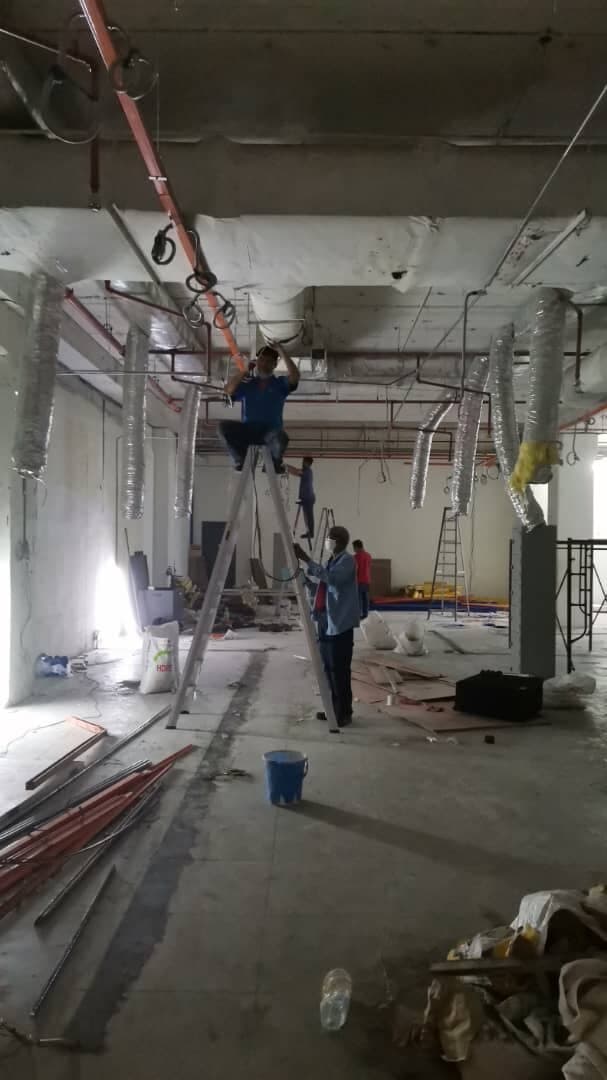
The hard reality of BMS project delivery
A building management system looks like a technical project on paper: design the sequences, wire the controllers, commission the points. Anyone who has actually delivered one on a live construction site knows the technical part is rarely what makes it hard. The difficulty is that a BMS is the last trade in, depends on everyone else's work being finished and correct, and gets squeezed between a main contractor's deadline and a dozen other consultants who all assume their part is done. This is what BMS project delivery actually looks like, and how a project engineer keeps it on the rails.
In short
- A BMS looks like a straightforward technical project on paper, but delivering one on a live construction site rarely is.
- It is usually the last trade to finish, absorbing the delays and design changes from every trade before it.
- Coordinating many consultants into one working integration, under pressure from the main contractor's schedule, is the real difficulty.
- A platform-and-overlay approach reduces this pain by decoupling the data and reporting layer from the underlying controls schedule.
Why the BMS is the hardest trade to deliver
The BMS doesn't control itself: it controls everyone else's equipment. The chillers, the air handlers, the pumps, the meters, the fire and the electrical systems are all supplied and installed by other parties. The BMS engineer's job is to make them work together, which means the BMS can only be finished when all of those are finished, correct, and accessible.
That structural position creates the core problem: the BMS inherits every upstream delay and every upstream defect. If the mechanical contractor's valves are installed backwards, if the electrical contractor hasn't powered the panels, if the chiller commissioning agent hasn't enabled the BACnet interface, the BMS engineer can't progress. But the BMS is what everyone's watching, because it's the system that proves the building works. Last in line, first to be blamed.
The coordination problem: many consultants, one integration
A typical building project has an M&E consultant, a mechanical contractor, an electrical contractor, the chiller and equipment suppliers, sometimes a separate ELV or ICT contractor, and the main contractor over all of them. Each owns a piece. The BMS systems integrator owns the seams between those pieces, and the seams are where projects fail.
The recurring friction points are predictable:
- Interface ownership. Whose scope is the BACnet card in the chiller? Who terminates the Modbus cable from the meters? These gaps between scopes are where weeks disappear, because each party assumes another covered it.
- Information that arrives late or wrong. The points list changes, the equipment model is substituted, the as-built differs from the drawing. The BMS was designed against one set of facts and built against another.
- Sequencing. The BMS engineer needs powered panels, networked devices, and commissioned mechanical plant to test against. When those slip, the BMS window doesn't move out — it gets compressed.
None of this is a controls problem. It's a coordination problem, and recognising that is the first step to managing it.
The pressure from the main contractor
Sitting over all of it is the main contractor, whose interest is the handover date. To the main con, the BMS is often the thing standing between them and practical completion, so the pressure concentrates there, frequently at the worst possible time, when upstream delays have already eaten the BMS programme but the end date hasn't moved.
The trap is agreeing to "just make it work" by cutting the one thing that protects the building: commissioning. A BMS rushed to hit a date, with point-to-point checks skipped and sequences never functionally tested, will technically switch on for the handover demo and then quietly underperform for years: short-cycling plant, false alarms, energy waste nobody traces back to the rushed commissioning. The pressure is real, but a signed-off system that doesn't actually run well is a worse outcome for everyone, including the main con who'll field the complaints.
What actually works in the field
Engineers who deliver BMS projects cleanly tend to do the same things, and most of them are about managing people and information, not controllers:
- Pin down the interfaces early, in writing. Before site work starts, get the scope seams agreed: who supplies, terminates, configures and tests each interface. A clear interface matrix prevents most of the week-eating disputes.
- Get the points list and protocols locked. Confirm every device's protocol (BACnet or Modbus), addressing, and points before fabrication. Equipment substitutions are inevitable; catch them when they happen, not at commissioning. See BACnet vs Modbus.
- Document relentlessly. When upstream work is late or wrong, a calm written record of what you were waiting for and when is what protects the BMS programme (and the engineer) when the schedule is reconstructed later.
- Protect commissioning time. Treat point-to-point and functional testing as non-negotiable. If the programme compresses, escalate the risk to the consultant and main con in writing rather than silently absorbing it by skipping tests.
- Phase the work. Commission what's ready rather than waiting for everything. Partial, verified progress beats a single high-risk push at the end.
- Communicate up, early. A main contractor can replan around a problem flagged three weeks out. They can't around one revealed on handover day. Surfacing risk early buys goodwill; hiding it spends it.
This is the discipline behind a well-designed BMS: design intent only becomes a working building if delivery survives the site. It's also why the design phase should anticipate it; we cover that in how to design a BMS.
How a platform-and-overlay approach reduces the pain
Some of this difficulty is intrinsic to construction and won't disappear. But a meaningful share of it comes from rigid, proprietary systems that make every integration a fight. Two choices reduce the friction:
- Open protocols mean fewer interface battles, because any device that speaks BACnet or Modbus can be integrated without a vendor's permission. Lock-in is what turns a routine interface into a commercial standoff.
- An overlay approach decouples the intelligence layer from the construction critical path. Rather than everything depending on a single monolithic system commissioned in one high-pressure window, a Smart Operation Platform can be layered onto controls as they come online, and continue adding value after handover. We explain the model in what "overlay" means.
This is the reality our engineers work in every day, and it's shaped how CobiNeural deploys (standalone or as an overlay on existing BMS, PLC and SCADA) so the value isn't hostage to one fragile commissioning window. The case studies are mostly exactly these jobs: messy, multi-party, mixed-vendor sites turned into buildings that run.
For how a BMS senses, decides and controls a building, see our free course Building Automation & BMS Fundamentals.
BMS delivery is hard because it's the trade that depends on all the others and proves the whole building. Manage the seams, the information and the people as deliberately as you manage the controls, and the project survives the site. If you're planning a project and want it scoped by people who've delivered this kind of integration before, talk to our building automation team.
FAQ
Frequently asked questions
Ask us about this topic
Something in this article you want to dig into — or a situation in your own building it doesn't quite cover? Send us your question. We don't run public comments; the team replies to you directly by email.